
The inbox problem nobody wants to admit
Most businesses do not start with a broken lead process. They start with something simple.
A prospect emails. Someone replies. A referral comes in. Someone makes a note. A website form sends a notification. Someone says, “I’ll follow up.”
At first, that works.
Then the business grows. More people are involved. More leads come from different places. The team adds events, referrals, forms, networking, social media, proposals, and maybe a CRM that no one fully trusts yet.
Before long, leads are scattered across:
inboxes
spreadsheets
contact lists
webform notifications
sticky notes
calendar reminders
text messages
someone’s memory
a CRM that only gets updated “when there’s time”
That is where the follow-up gap starts.
The problem is not that your team does not care. The problem is that the process is not visible enough to manage consistently.
And an inbox was never designed to do that job.
Symptoms: how you know your inbox is acting like a pipeline
If you are not sure whether your lead tracking has outgrown your inbox, look for these signs.
1. You have to search email to figure out what happened
If the first step in checking a lead status is typing someone’s name into the search bar and hoping the right thread appears, the process is already too fragile.
Your team should not have to investigate every opportunity from scratch.
2. Follow-up depends on memory
If someone has to remember to check back next week, remember who was interested, remember which proposal went out, or remember where the conversation left off, that is not a system.
That is a human being carrying too much process in their head.
3. Nobody can quickly see active opportunities
A healthy pipeline should show what is active, what is waiting, what is stuck, and what needs attention.
If leadership cannot see that without asking three people and checking two spreadsheets, the business does not have real pipeline visibility.
4. Leads fall through the cracks after the first response
This is one of the most common breakdown points.
The first reply happens. Great. But then the second step is unclear.
Was the lead supposed to book a call?
Was someone supposed to send pricing?
Did a proposal go out?
Who follows up if they do not respond?
That gray area is where leads go cold.
5. Proposals are sent, but follow-up is inconsistent
For many service businesses, trade teams, and growing organizations, the proposal stage is a major leak.
The proposal goes out, everyone gets busy, and follow-up becomes “I think someone checked in.”
That is not visibility. That is hope with a PDF attached.
Cause: why lead tracking breaks down
Lead tracking usually breaks down because the workflow was never fully defined.
Most teams focus on the tool first.
They ask:
Do we need a CRM?
Should we use Zoho?
Can we automate this?
Can forms push into the system?
Can we get a dashboard?
Those are good questions, but they are not the first questions.
The better first questions are:
Where do leads enter the business?
Who owns each lead?
What are the stages from inquiry to close?
What counts as a qualified lead?
What happens after the first response?
What happens after a proposal is sent?
When do we stop following up?
What information needs to be visible to the team?
What information needs to be visible to leadership?
Without those answers, even a good tool can become another place where confusion lives.
Very organized confusion, maybe. But still confusion.
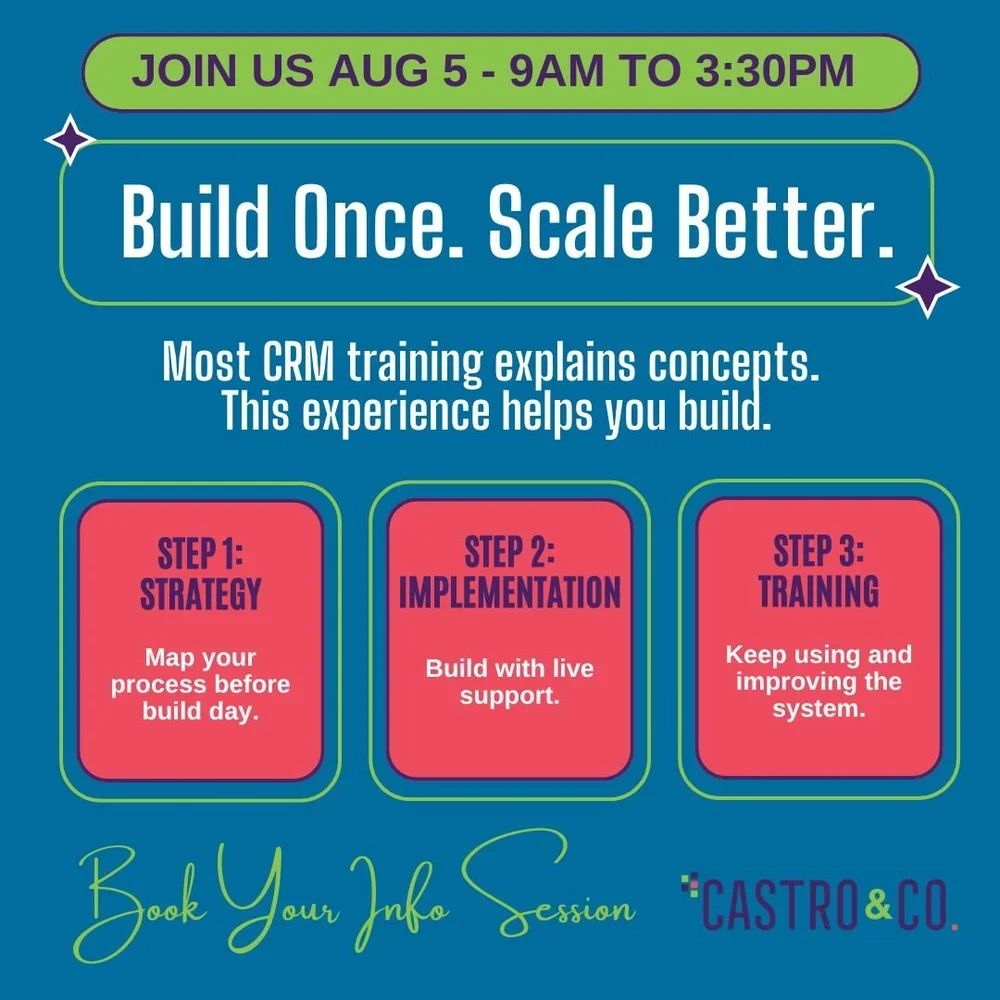
Ready to Stop Managing Leads From Your Inbox?
If this sounds familiar, you are not behind — your business may have simply outgrown the way leads are currently being tracked.
That is exactly why Build Once. Scale Better. was created.
The goal is not to build every possible customization in one day. The goal is to help you create a practical CRM foundation you understand — and can continue updating as your business grows.
The workshop includes support before, during, and after the in-person build day so you are not figuring it out alone.
Build Day: Wednesday, August 5, 2026
Location: West + Main — RiNo, Denver
Interest Form Deadline: Friday, July 17, 2026