
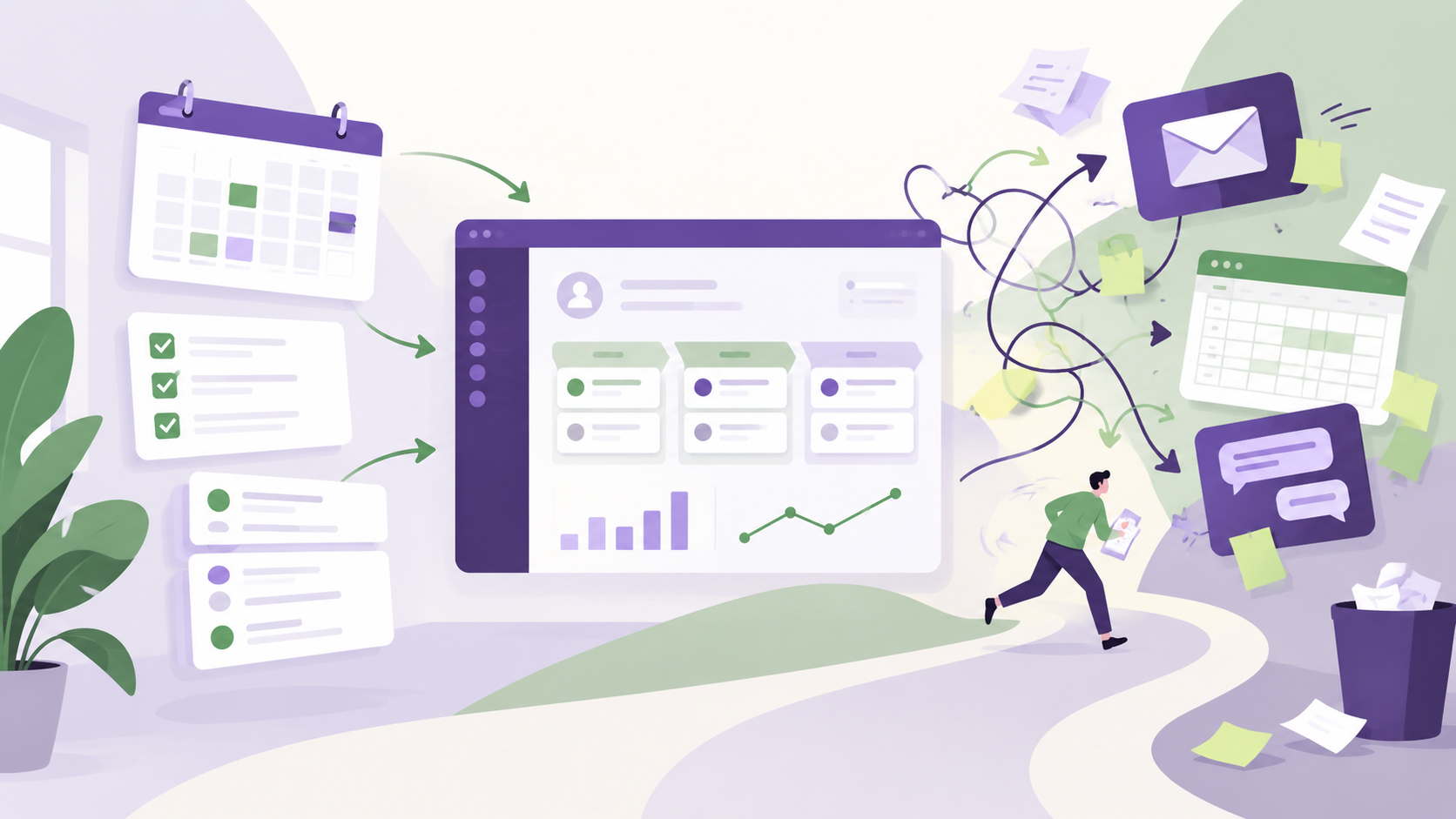
Why Your Team Stops Using the System When Work Gets Busy
When your team stops using the CRM, creates side spreadsheets, or works around the process during busy periods, the problem may not be the software. It may be a sign that training, documentation, or the workflow itself needs attention.
Back-to-School for Your Business:
Your team may not need another platform. It may need clearer processes, better documentation, and stronger support using the systems you already own. Here’s what to review before adding more software, automation, or AI to the mix.

The August Systems Check: What to Clean Up Before Fall Gets Busy
August is the right time to review your workflows, reports, scheduling, training, and software subscriptions before fall gets crowded. A focused systems check now can save time, reduce unnecessary costs, and prevent bigger problems later.

Are Your Systems Ready for the Busy Season?
Missed follow-ups cost opportunities. Manual tracking costs time. Duplicate tools cost money. Unclear next steps cost energy. Hard-to-find client notes cost momentum.
And by the time the holiday rush arrives, most business owners do not have extra space to stop, clean up the workflow, and rebuild the system.
That is why late summer is a smart time to review what is working, what is scattered, and what needs to be simplified before the rest of the year picks up.

The Relationship Side of CRM: Why Follow-Up Is Really a Trust Issue
Good relationships do not grow from one conversation alone. They grow through thoughtful follow-up, clear next steps, and systems that help you remember people, promises, context, and timing.

The First 24 Hours
The first 24 hours after a new inquiry can reveal a lot about your business systems. If follow-up depends on inboxes, spreadsheets, sticky notes, or memory, good leads may be going cold before you realize it.

Part 2: Your Inbox Is Not a Pipeline: The Fix
Before you build or rebuild your CRM, make the lead path visible. Part 2 walks through how to identify lead sources, define ownership, create simple pipeline stages, clarify follow-up expectations, and track stalled opportunities so your tools support the workflow instead of trying to replace it.

Your Inbox Is Not a Pipeline: Why Lead Tracking Breaks Down
If your business is managing leads through inbox searches, spreadsheets, sticky notes, and memory, your follow-up process may be harder to see than you realize. In Part 1, we’re looking at why an inbox is not a pipeline — and where leads start slipping through the cracks before your CRM foundation is in place.

Why Growth Starts Breaking Your Business Before It Scales It
Growth is exciting - until it starts to feel heavy. More clients and revenue also means more pressure on the systems and processes holding everything together. Here's why growth exposes what was always there, and what to do before the cracks become crises.

Stop Treating AI Like a Trend and Start Treating It Like a System
AI is everywhere right now - but bolting it onto a messy tech stack won't fix your business. It will just help you move faster in the wrong direction. Here's how to evaluate AI tools honestly, test them efficiently, and integrate them in a way your team will actually use.